







PLANS to turn an old Greenock sugar refinery building into a community learning hub were approved even though it will only have 20 per cent of the parking spaces required under official guidelines.
Inverclyde Council planning officers have given Creative Regeneration permission to convert, alter and extend the Grade B-listed Glebe premises on Ker Street/Crawfurd Street, as well as creating a public square. Activities will take place over five existing floors and a new rooftop extension, with likely maximum occupancy being 100 people.

The council’s Roads and Transportation Service was consulted over the application and said that parking should be provided in accordance with the National Roads Development Guidelines. They calculated that the proposal meant a requirement for 26 car parking spaces and 45 cycle parking spaces.
But the application now approved provides a total of five spaces, four at the front, and one further accessible space to the rear. Eight bicycle stands are included, providing for 16 cycles.
The assessment by planners states that the target demographic for the building is 12 to 18 years of age and that, based on experience at their site on King Street, Gourock, Creative Regeneration estimates that around 80 per cent of users will walk, cycle or take public transport and only about 20 per cent will be by parental drop-off.
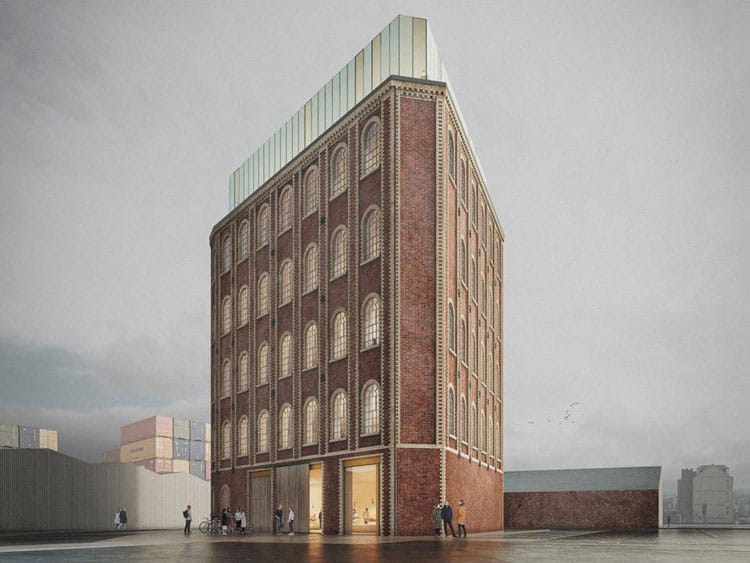
Staff numbers are low and sessions with around 10 to 20 persons will be held over staggered starting and finishing times. A number of visitors are expected from the Ocean Terminal on foot and public transport options are available. National Cycle Route 75 is adjacent to the building. A number of public car parks are within 10 minutes of the building.
A Green Travel Plan is proposed which will include cycle to work initiatives; promotion of car sharing; provision of public transport season tickets and ongoing monitoring.
The decision report continues: “It is difficult to predict the proportion of journeys that will be on public (or sustainable) transport and those using private transport. The immediate surrounding area has significant long term parking pressure, and the retail unit adjacent has private parking with private enforcement protocols.
“It is likely that the estimated maximum number of occupants (100 but staggered in terms of simultaneous occupation) will contain a significant number of younger people.
“It is not certain that any one demographic will largely utilise public (or sustainable) transport opposed to private transport but conversely, the applicant has suggested measures that would actively encourage public and sustainable transport options.
“The location is within the town centre boundary, and public transport options are available. However, this factor must be balanced against the significant existing pressures on parking. The council’s Roads and Transportation Service have noted a significant shortfall in parking provision based on the use of each level of floorspace, whilst noting the applicant’s mitigation measures contained within the Transport Plan.
“Whilst the proposal does not fully satisfy the parking standards ordinarily sought by the Roads and Transportation Service for the uses proposed, it is recognised that planning decisions require all material considerations to be weighed in the overall planning balance.
“In this instance, significant weight is attached to the site’s highly accessible town centre location, proximity to public transport services, active travel connections, the proposed Travel Plan and the substantial public benefits arising from bringing a long-term vacant Category B listed building back into productive use for educational, training, cultural and community purposes.
“It is also recognised that the applicant has sought to maximise the level of on-site parking provision achievable within the constraints of the site, with five parking spaces proposed.
“Whilst parking provision falls below the standards sought by the Roads and Transportation Service, [planning policy] recognises that reduced parking levels may be acceptable in highly accessible locations where sustainable transport opportunities are available and actively promoted.
“Given the town centre location, proximity to public transport services, National Cycle Route 75 and the applicant’s proposed Travel Plan measures, it is considered that the identified shortfall in parking provision would not, on balance, outweigh the wider benefits of the proposal or justify refusal of the application.”