



A NEW £10 million care centre in Greenock has received a special commendation for its striking design.
The Inverclyde Integrated Community Hub, or ‘The Hub’, was recognised by the Glasgow Institute of Architects (GIA) at its annual design awards.

The state-of-the-art facility is for adults with learning disabilities and other complex needs along with support staff from Inverclyde Health and Social Care Partnership (HSCP).
It was designed by architects Holmes Miller and built on the former Hector McNeil Baths site in Greenock for Inverclyde Council by main contractor Ogilvie Construction with the project led by the council alongside development partner hub West Scotland.
The building, which has capacity for up to 50 service users, was the only project to receive award recognition in the healthcare category.

Ruaridh Nicol, project director at Holmes Miller, said: “Designed as a welcoming landmark pavilion, the hub enhances access to healthcare, community services, and public transport while promoting independence and inclusion.
“Drawing inspiration from Greenock’s industrial heritage, the timber-framed building adopts a fabric-first and biophilic design approach, integrating natural materials, sensory gardens, and calming interior environments to support users’ physical and mental wellbeing.”

The judges praised the positive working relationship between the council/HSCP and partners to deliver the landmark care facility, which was designed to transform the way health and social care services are delivered.
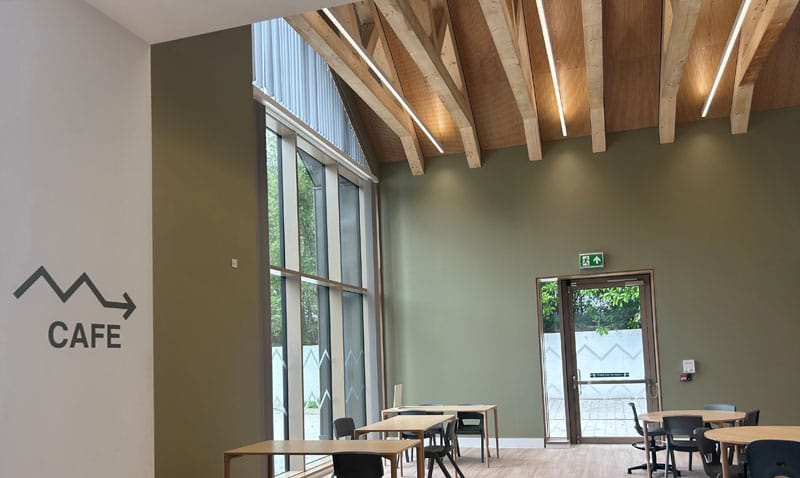
Councillor Stephen McCabe, leader of Inverclyde Council, said: “The Hub is a first-class facility for service users and staff with state-of-the-art equipment and it is also visually striking inside and out.
“Every part of the building has been carefully designed with the best interests of service users in mind which is why everyone involved in the development and delivery of The Hub, including council and HSCP staff, the architects, main contractor and delivery partners, deserves this worthy recognition.”
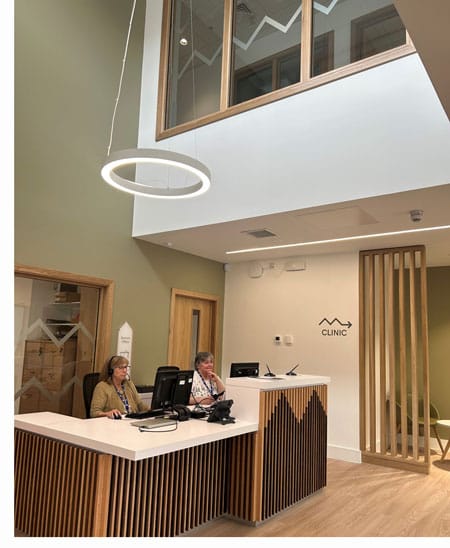
The Hub offers a wide range of therapeutic and support services within a single, integrated space. These include specialist areas for rebound therapy, immersive therapy and physiotherapy, alongside life skills facilities that will support individuals to develop independence in areas such as cooking and daily living.
Iain Marley, chief executive of hub West Scotland, said: “This recognition is thoroughly deserved and reflects what can be achieved when a client with real ambition works collaboratively with its design and delivery partners.
“Good design in facilities like this is about much more than creating an attractive building. It can make a genuine difference to the experience, wellbeing and dignity of the people who use it, while providing an environment that helps the amazing staff delivering services there to do their very best work.
“hub West is enormously proud to have played our part in bringing the Inverclyde Integrated Community Hub to life.”
The purpose-built facility replaced the Fitzgerald Centre and former McPherson Centre and represents a significant milestone in delivering modern, inclusive and person-centred care across Inverclyde to replace the traditional learning disability day service model.
The building was thoughtfully designed to promote wellbeing, with many spaces offering direct access to outdoor areas to support therapeutic horticulture and the benefits of time spent outdoors.
A dedicated autism-friendly zone, with a separate entrance, has also been developed to provide a calmer, more accessible environment for individuals who require it.
Service users, parents, carers and wider stakeholders have played a central role in shaping the design of The Hub, ensuring that it reflects their needs, priorities and aspirations. This collaborative approach will continue as the service evolves, supporting ongoing improvement and development.
The building was funded by Inverclyde Council and Inverclyde Integration Joint Board (IJB) — the organisation which manages the HSCP on behalf of the council and health board — and supported by a £990,000 grant from the Scottish Government Low Carbon Vacant and Derelict Land Investment Programme (VDLIP).